
Home » Indoor Positioning in Metal-Heavy Environments
Indoor Positioning in Metal-Heavy Environments
Does metal break indoor positioning?
Steel coil warehouses, foundries, metal racking, machine shops – these are some of the hardest environments for indoor positioning. Or at least, they are for some technologies. A common question from industrial customers is simple: “We have metal everywhere. Will it work?” For Marvelmind ultrasound positioning, the answer is: the metal itself does not matter at all. What matters is something else entirely – and this article explains exactly what.
The RSSI problem (BLE and Wi-Fi)
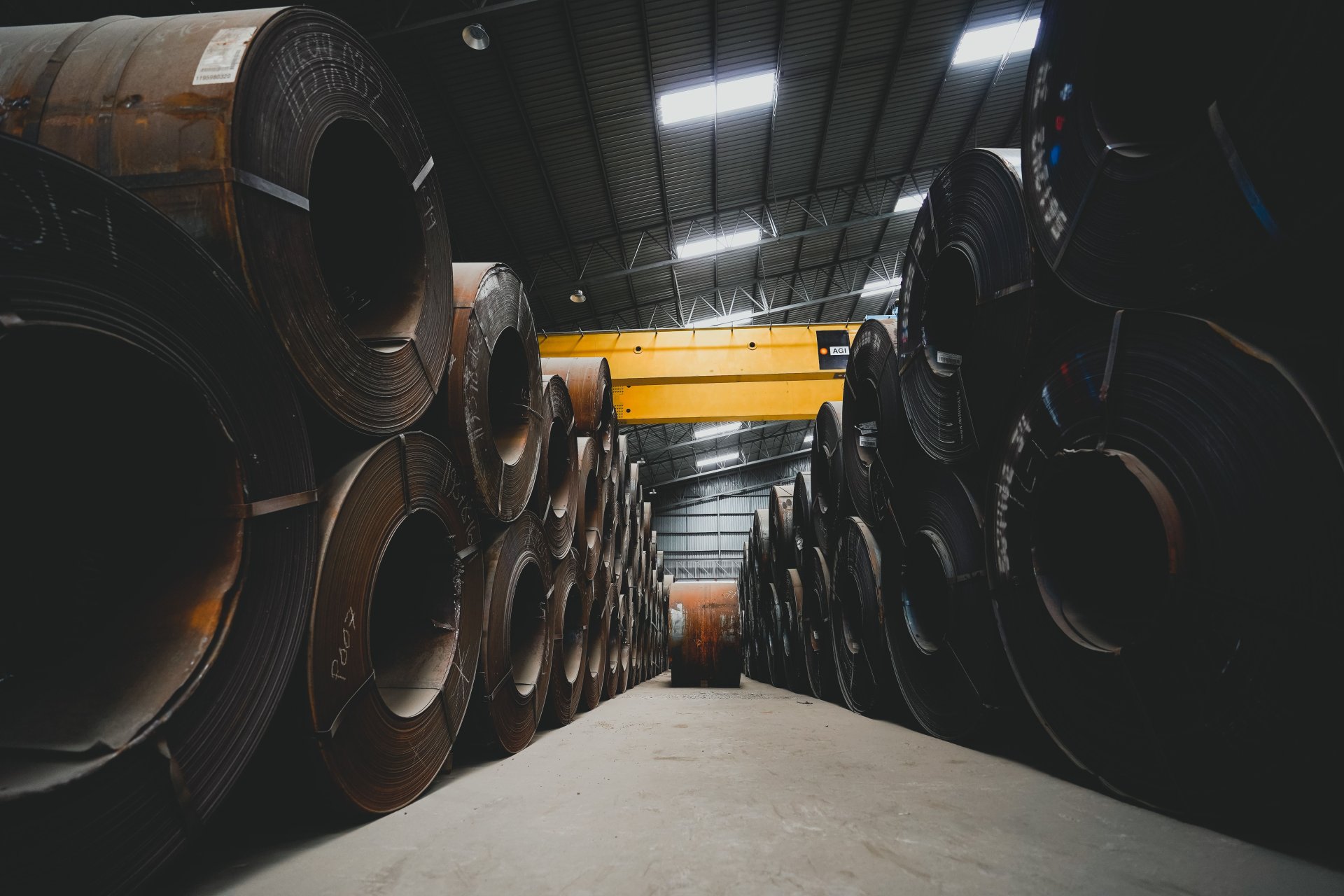
BLE and Wi-Fi indoor positioning systems estimate distance from RSSI – the received signal strength. The assumption is that a weaker signal means a more distant tag. In a clean, empty room that assumption is already shaky; in a metal-heavy environment it largely breaks down.
Metal surfaces strongly reflect radio waves. The result is heavy multipath: the receiver picks up the direct signal plus many reflected copies, which add and cancel unpredictably. This produces deep signal nulls and sharp peaks just centimeters apart, with no relation to actual distance. RSSI was never a precise ranging method to begin with – typical BLE accuracy is on the order of 2-5 meters – and surrounding metal makes the underlying measurement even less reliable. This is a limitation of the RSSI method itself, not a tuning problem.
UWB, Multipath, and a Strange Contradiction
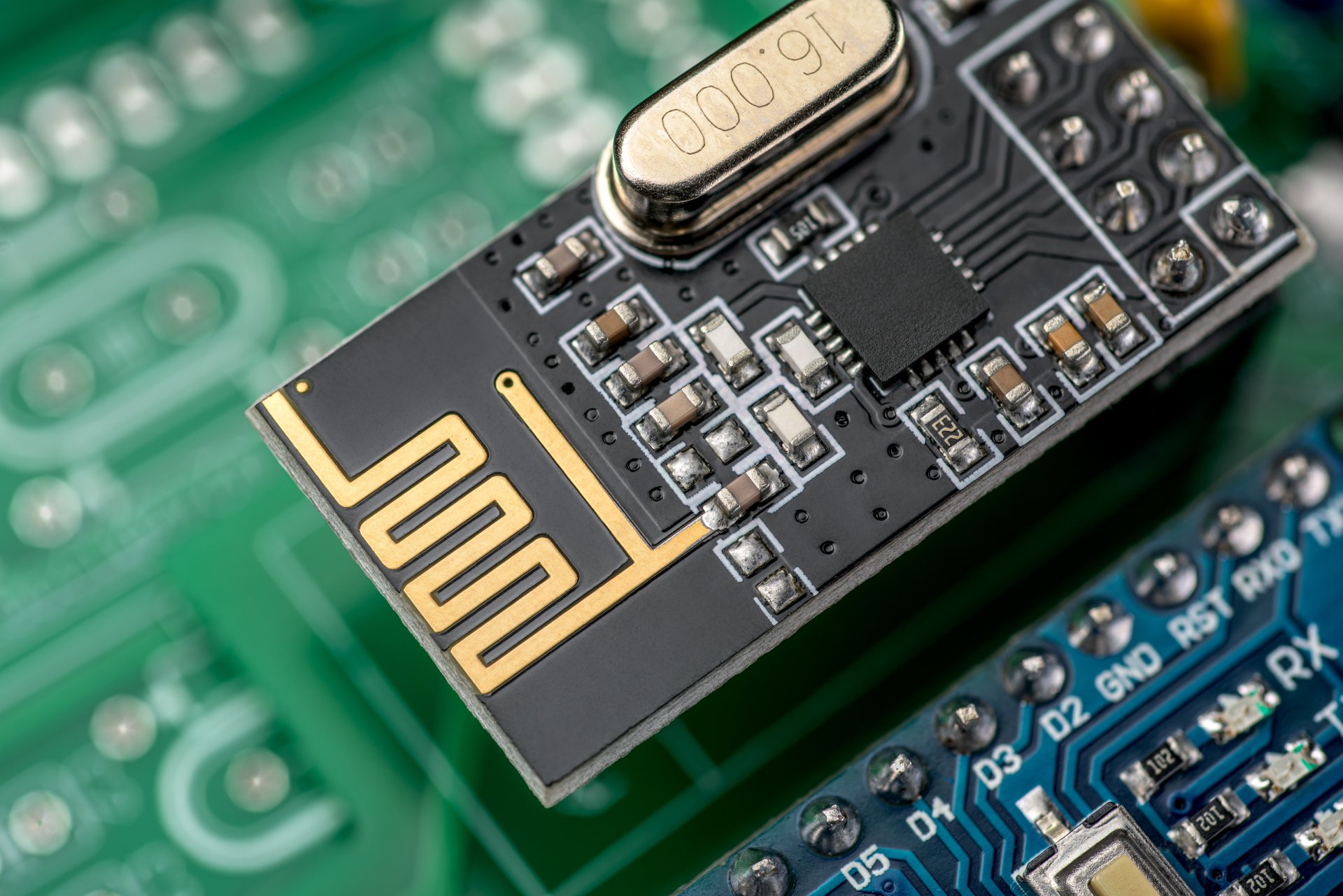
UWB is a time-of-flight (ToF) technology – it measures the actual travel time of a radio pulse, not signal strength. In principle, a ToF system should be far more robust to multipath than an RSSI system. Yet field reports still describe UWB struggling with multipath in cluttered metal environments. Why?
Part of the explanation is likely deployment, not physics. UWB is frequently marketed as working “without line of sight,” which encourages installations where tags and anchors genuinely cannot see each other. In those conditions the radio pulse has to pass through or diffract around obstacles, and around metal that simply does not happen cleanly. We cannot speak for how individual UWB systems are engineered – we can only speak for our own. But the pattern suggests the problem is often a non-line-of-sight deployment, not an inherent flaw of ToF ranging.
What "line of sight" really means
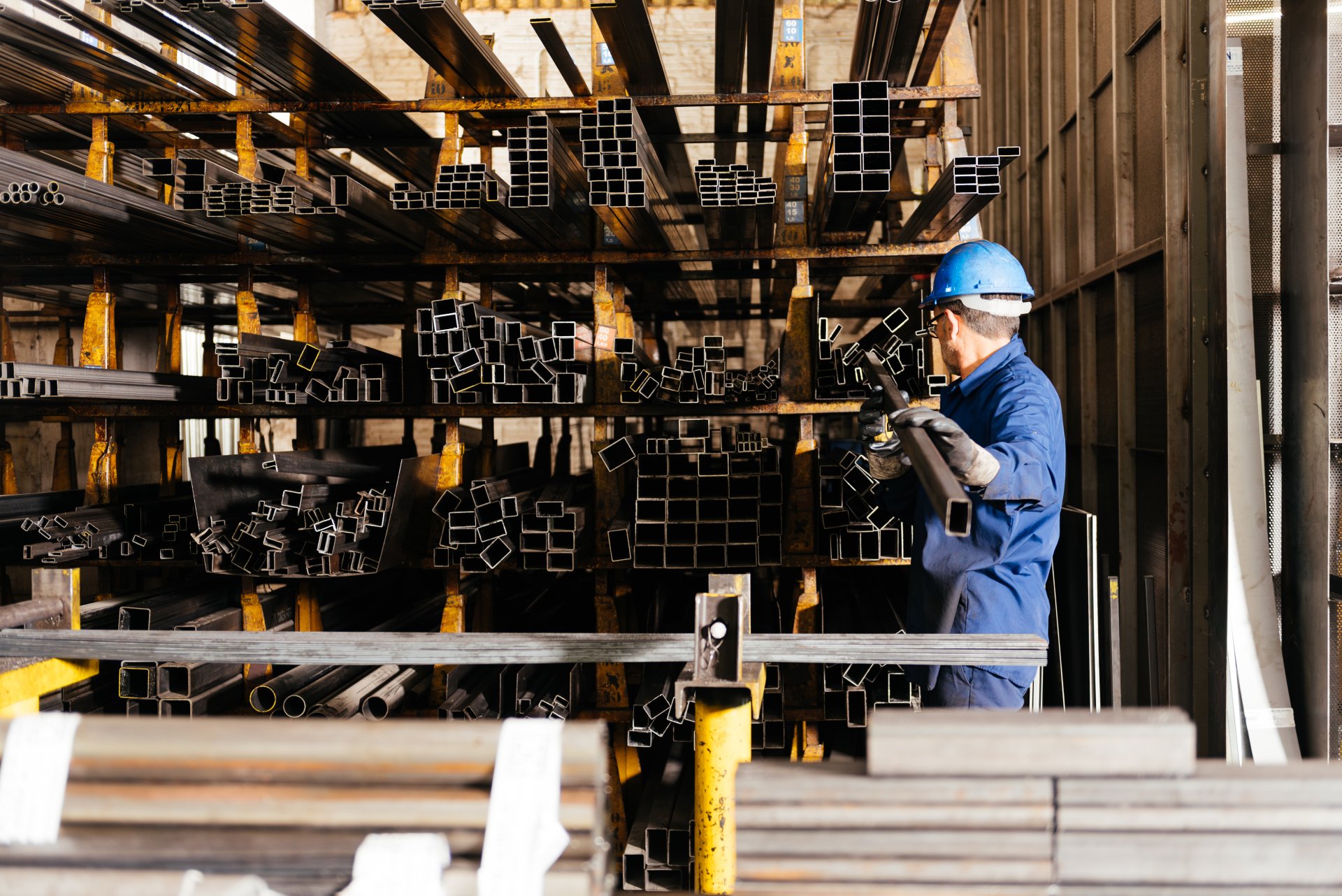
Here is the key point that is often missed. Every indoor positioning technology requires line of sight – the differences are only in what kind:
- Ultrasound needs acoustic line of sight (direct “hearing”)
- LIDAR and optical systems need optical line of sight (direct visibility)
- UWB needs radio transparency (a radio-transparent path)
Metal blocks all three. It blocks sound, it blocks light, and it blocks radio. So when UWB is marketed as “no line of sight required,” that claim is already optimistic in ordinary conditions – and in a metal environment it does not hold at all. Line of sight is always required.
Why Multipath Is Not a Problem for Marvelmind
Multipath means a signal arrives at the receiver by more than one path: the direct path plus one or more reflected paths. The crucial fact is that a reflected path is always longer than the direct path, so the reflected copy always arrives later than the direct one.
That is exactly why the direct signal – the line-of-sight signal – is what we rely on. As long as the direct path exists, our system identifies the first-arriving signal and uses it for the distance measurement; later reflected copies are simply separated out. This is why multipath, by itself, is not a problem for Marvelmind. Reflections off steel coils, racking, or machinery do not corrupt the measurement, because they arrive after the direct signal we already used. The same logic should hold for any properly engineered ToF system, UWB included – we cannot account for how others implement it, only for our own, where multipath is a non-issue as long as line of sight is present. And when line of sight is absent, there is no direct signal to anchor to – which is simply the universal reason line of sight is required in the first place.
How Marvelmind Works in a Steel Plant
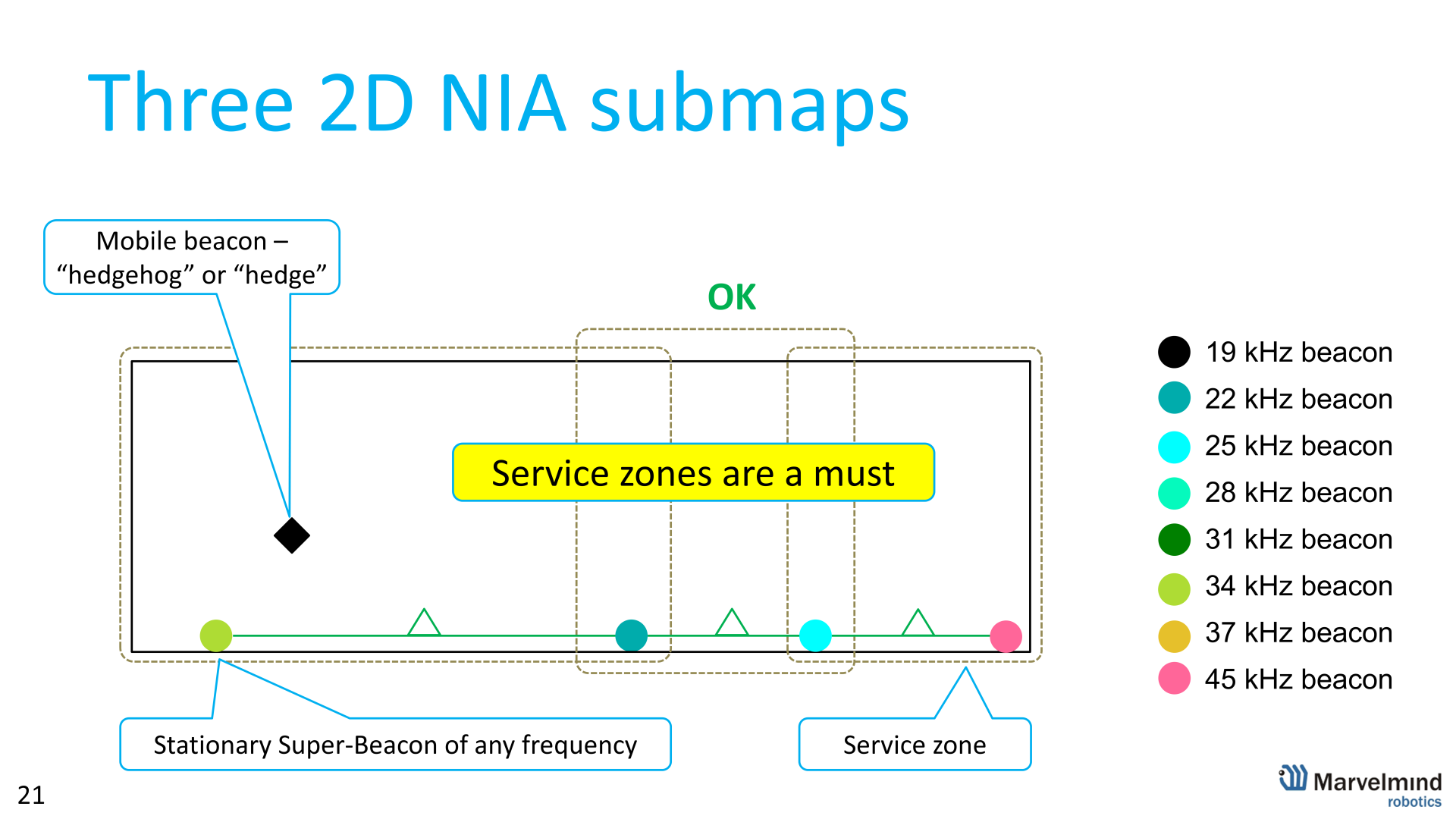
For Marvelmind, the surrounding material – metal, concrete, wood, glass, or open air – is irrelevant. The system has exactly one geometric requirement: a mobile beacon must have direct acoustic line of sight to the stationary beacons serving it – at least 2 stationary beacons within 30 m for 2D tracking, or at least 3 within 30 m for 3D. Satisfy that, and a steel coil warehouse performs the same as an empty room.
Cover Areas of Any Size with Maps of Multiple Submaps
This naturally raises the question of large facilities. The answer is submaps. A large space is covered much like a cellular phone network covers a city: the network is built from many cells, and to the user it behaves as one seamless network. Marvelmind does the same with submaps – each submap meets the line-of-sight requirement above, and many submaps are stitched together. To the user it looks like one large, unified map, while underneath it is a mesh of submaps. There is no practical size limit; facilities of any size can be covered this way.
In Summary
- Metal does not matter to Marvelmind. The surrounding material has no effect on ultrasound positioning accuracy
- Line of sight does matter – always. A mobile beacon needs direct acoustic line of sight to 2+ stationary beacons (2D) or 3+ (3D) within 30 m
- Multipath is not a problem. The direct line-of-sight signal always arrives before reflections, so reflected copies are separated out
- Any size is coverable. Submaps tile together like cells in a mobile network and appear as one unified map
- Once the line-of-sight requirement is met, a steel mill, a foundry, or a metal racking warehouse performs exactly like open space
If you are planning to track carts, forklifts, cranes, coils, or personnel in a metal-heavy facility, share your floor plan with info@marvelmind.com (any language welcome). Our team will help you place stationary beacons so the line-of-sight requirement is met across the whole area – and the metal around them simply will not be a factor.