
Home » The Curious Silence Around Ultrasound Indoor Positioning
The Curious Silence Around Ultrasound Indoor Positioning
When ±2cm accuracy makes side-by-side comparisons difficult
Indoor Positioning System: accuracy comparison
When researching indoor positioning systems, you’ll notice a curious pattern: major technology providers extensively discuss UWB (Ultra-Wideband) and Bluetooth positioning solutions, yet rarely mention ultrasound-based systems. This silence isn’t accidental – it’s strategic.
While UWB systems typically achieve 10-30 cm accuracy and Bluetooth beacons reach 1-3 meters at best, even with the Angle-of-Arrival (AoA) enabled, ultrasound indoor positioning systems deliver ±2 cm precision in real-world deployments.
The accuracy difference is so significant that discussing ultrasound technology would immediately expose the accuracy limitations of alternative solutions, which is precisely why the solution providers avoids such a direct accuracy comparison with ultrasound-based systems.
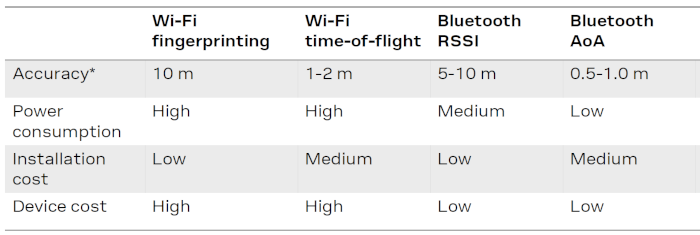
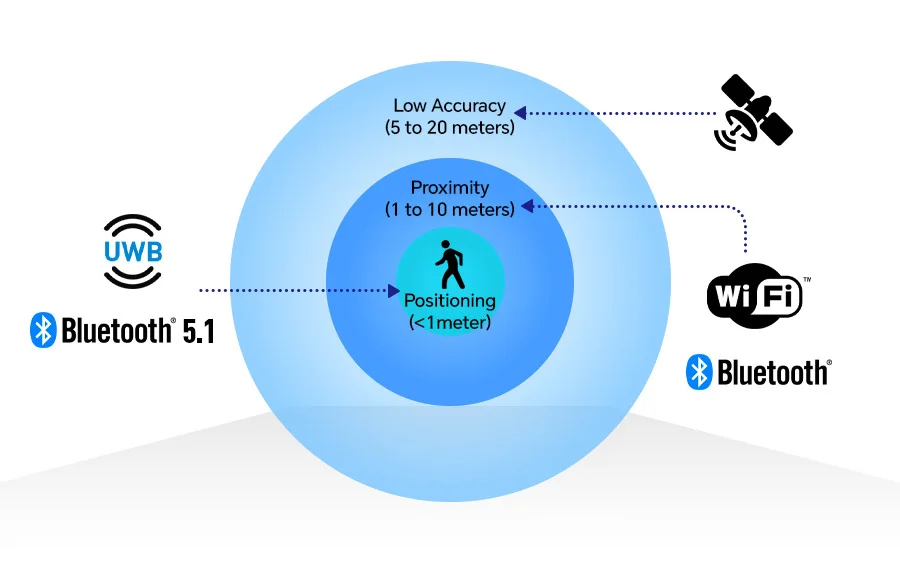
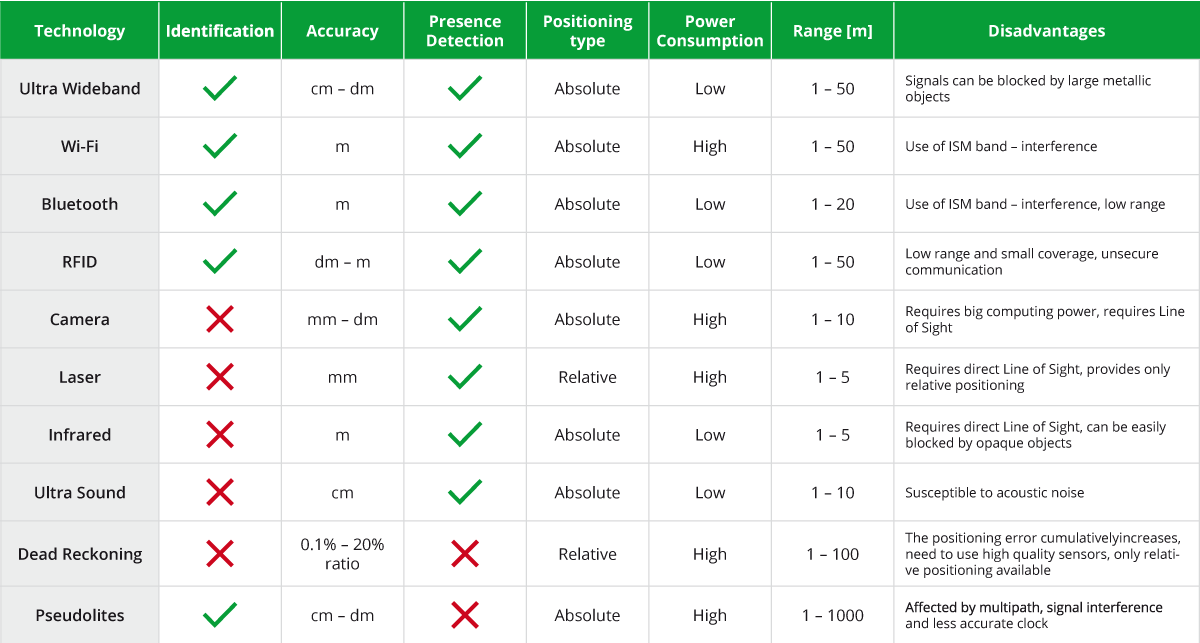
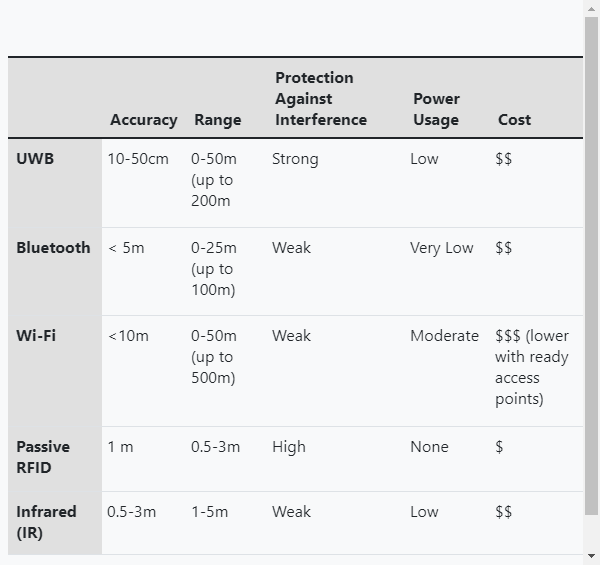
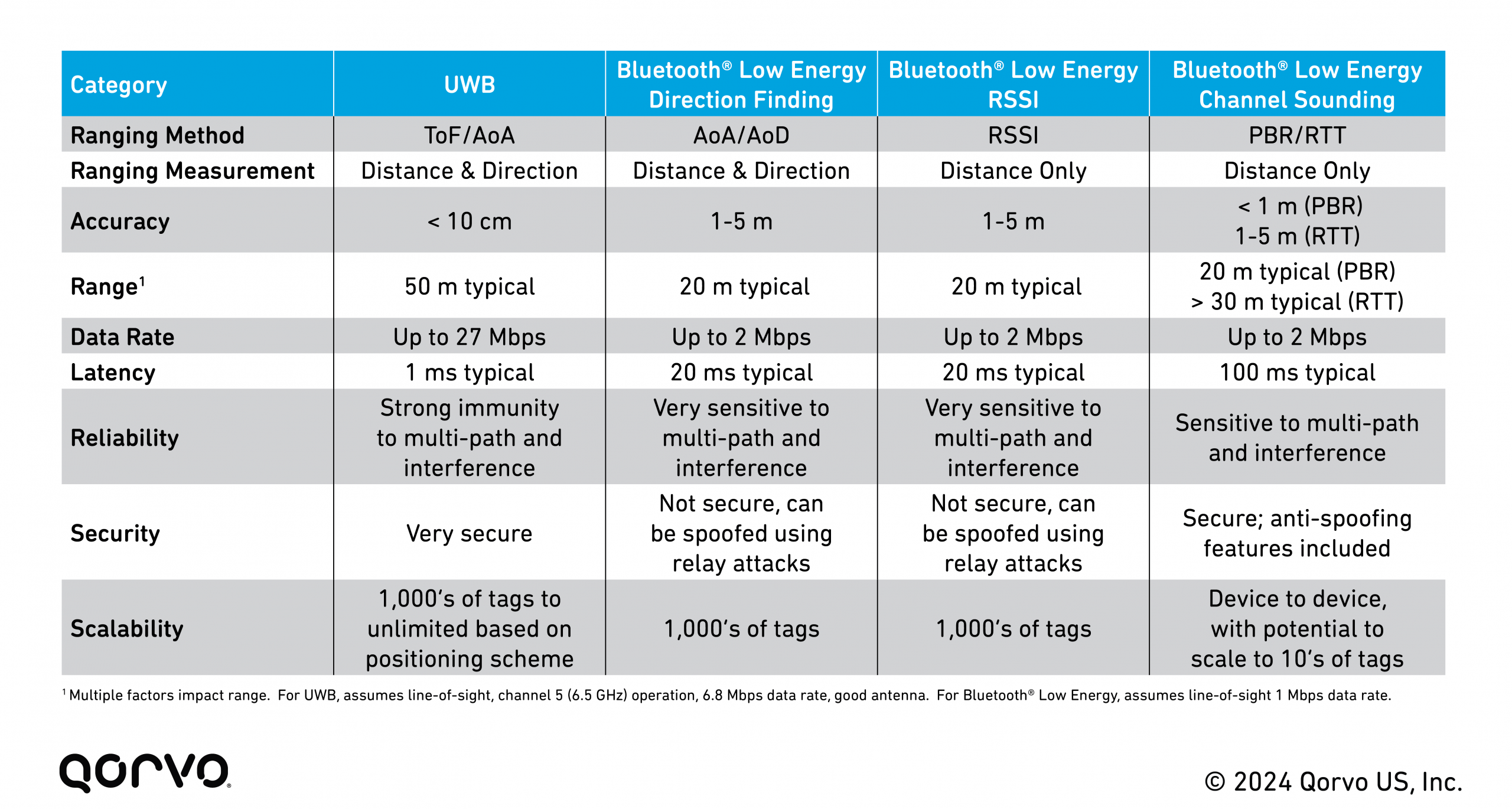
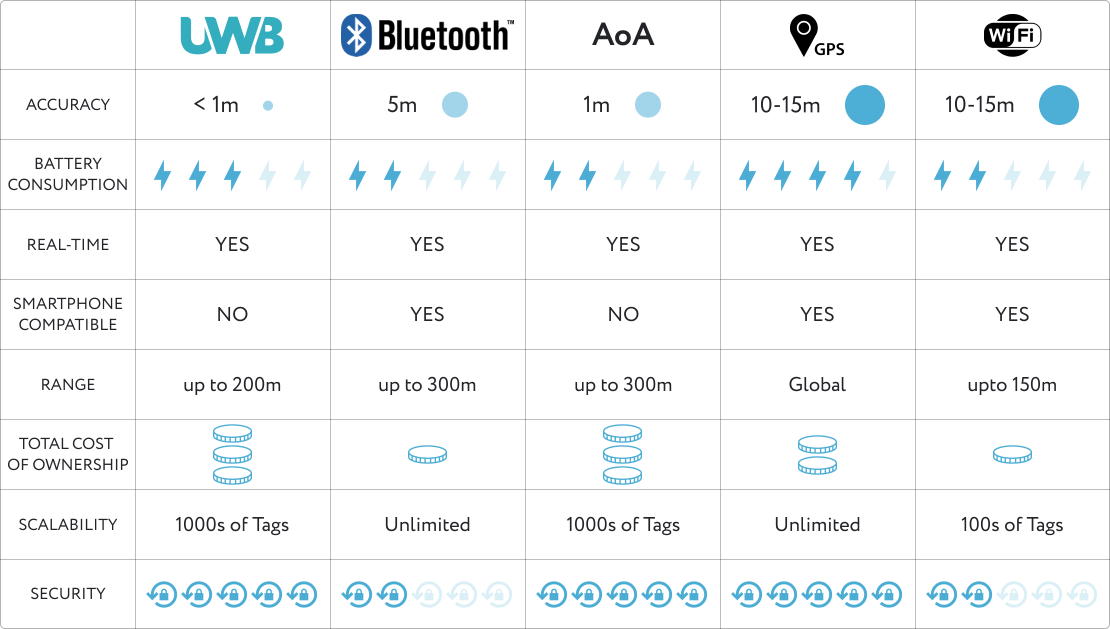
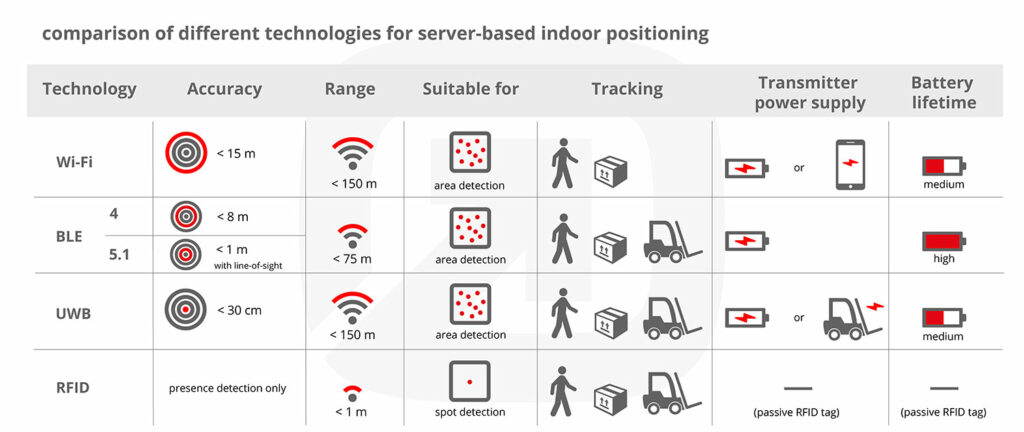
Technology comparison images from industry publications are used here for educational purposes and remain the property of their respective creators. We reference these materials to highlight a significant gap: ultrasound-based indoor positioning, which delivers ±2cm accuracy for industrial robotics and automation applications, is notably absent from most competitive analyses, even though it offers the highest precision available from Marvelmind Robotics.
Why Accuracy Matters for Industrial and Robotics Applications
For autonomous mobile robots, AGVs, and drones operating in industrial environments, positioning accuracy directly impacts performance and safety. Marvelmind’s ultrasound technology delivers ±2 cm positioning accuracy consistently – the level required for narrow-aisle navigation, precision docking, and dense facility operations.
UWB serves many applications well within its 10-30 cm accuracy range. However, Bluetooth’s RSSI-based approach faces fundamental challenges in industrial settings: signal strength fluctuates significantly around metal structures, making BLE solutions inherently inaccurate.
When your application requires better-than-UWB positioning—whether for warehouse automation, manufacturing robotics, or indoor drone operations – ultrasound-based systems provide the reliability you need.
Choosing the Right Indoor Positioning Technology
Different applications require different levels of accuracy, and each technology has its place. For healthcare asset tracking or general location awareness, Bluetooth offers practical solutions.
For precision industrial applications, the choice depends on your actual requirements. Marvelmind’s ultrasound indoor positioning system is designed for robotics, industrial automation, and drone applications that require centimeter-level accuracy. When evaluating positioning technologies, focus on verified real-world performance data rather than theoretical specifications.
Ask vendors for actual achieved accuracy in environments similar to yours, and ensure comparative evaluations include ultrasound technology. Your positioning system should match your precision requirements—and for applications demanding the highest accuracy, ultrasound technology delivers proven, consistent ±2 cm performance.